Project Overview
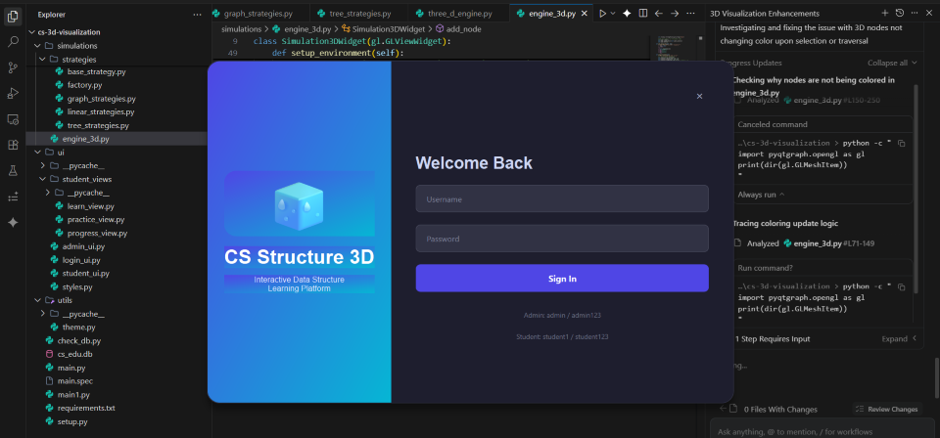
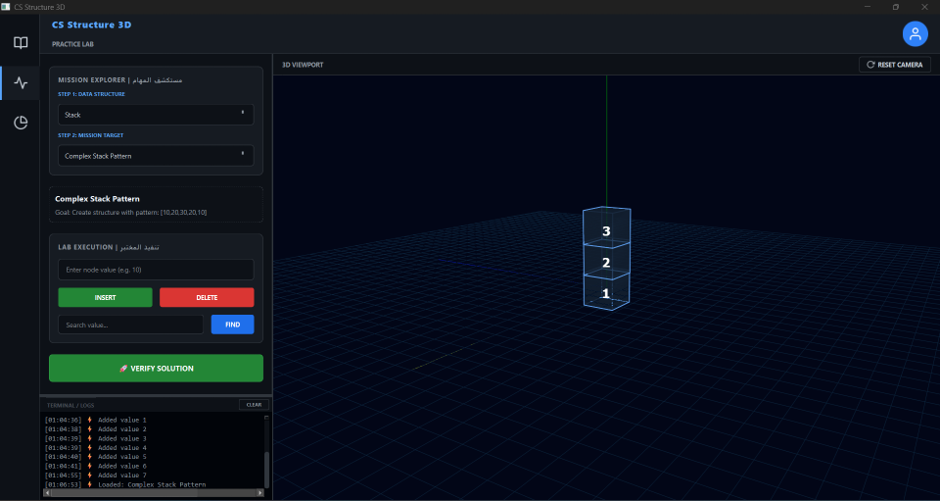
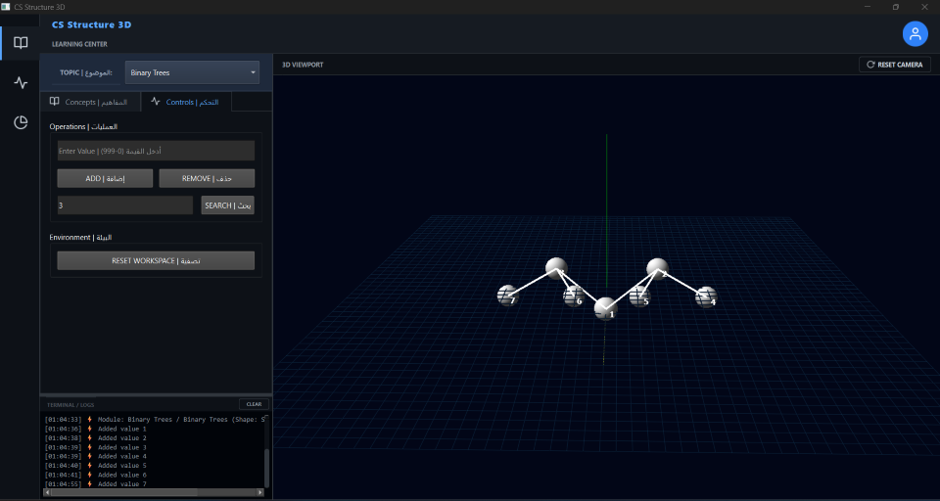
This project addresses the challenge of abstract Computer Science concepts by developing a cross-platform desktop application that offers interactive 3D visualizations. Traditional teaching methods often lead to comprehension gaps in topics like data structures, algorithms, operating systems, and computer networks. The application, built with Python, utilizes PyQt6/PySide for its intuitive graphical user interface and Matplotlib/VPython for dynamic 3D simulations and interactive models.
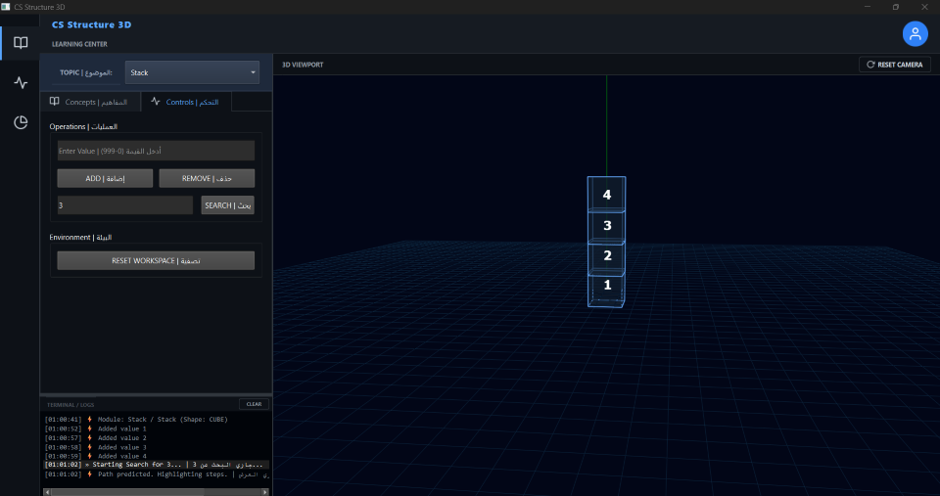
Key features include animated simulations of fundamental data structures (stacks, queues, linked lists, binary trees) with user-driven operations, interactive CPU scheduling algorithms (FCFS, Round Robin) with process queues and utilization graphs, and network topology visualizations demonstrating OSI layers and packet routing. The system incorporates an SQLite database for managing user profiles, tracking progress, storing simulation parameters, and logging performance metrics.
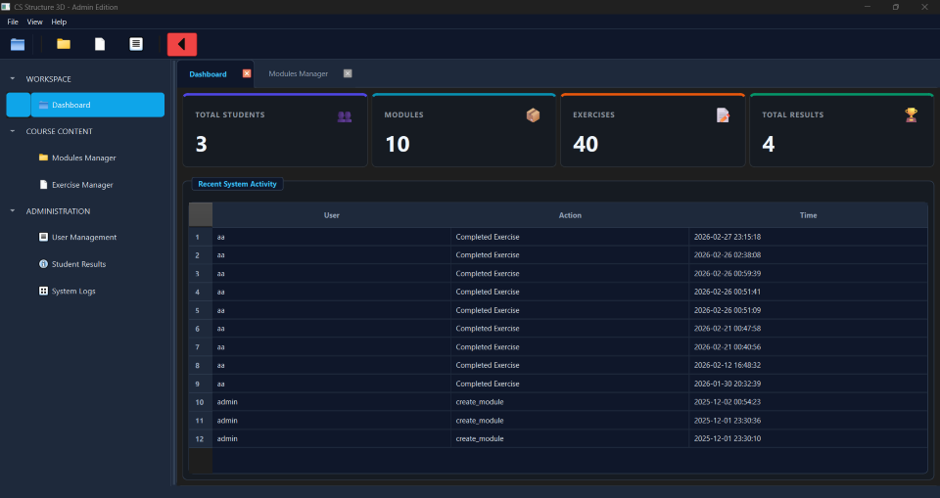
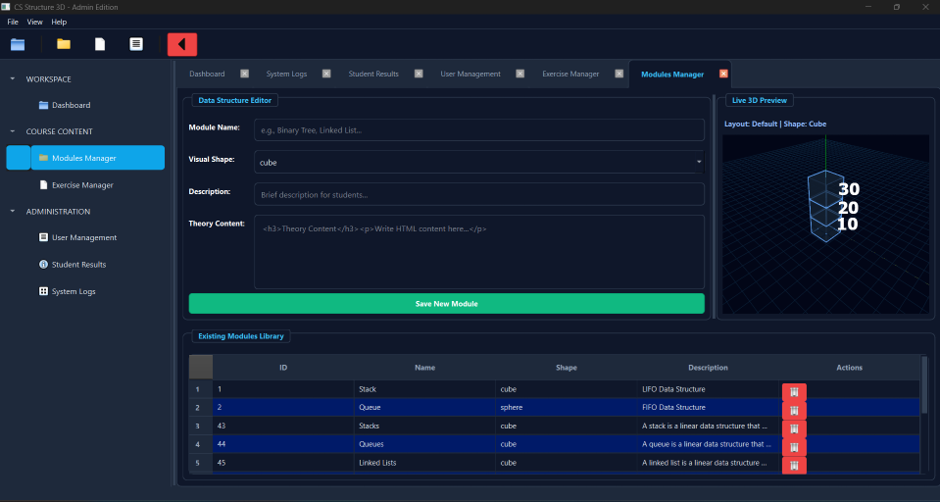
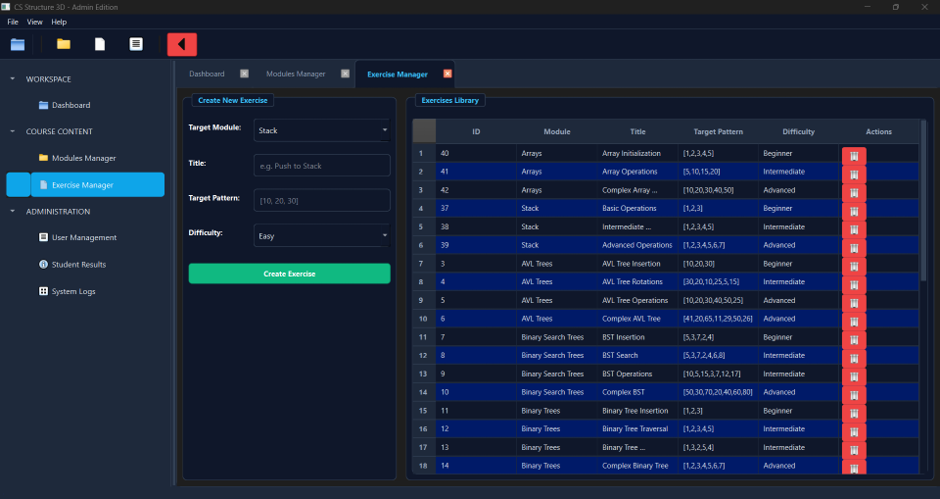
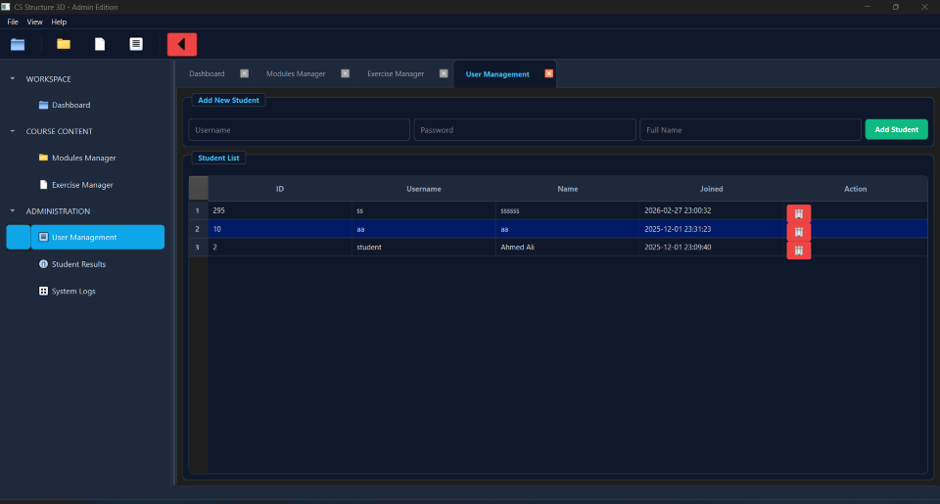
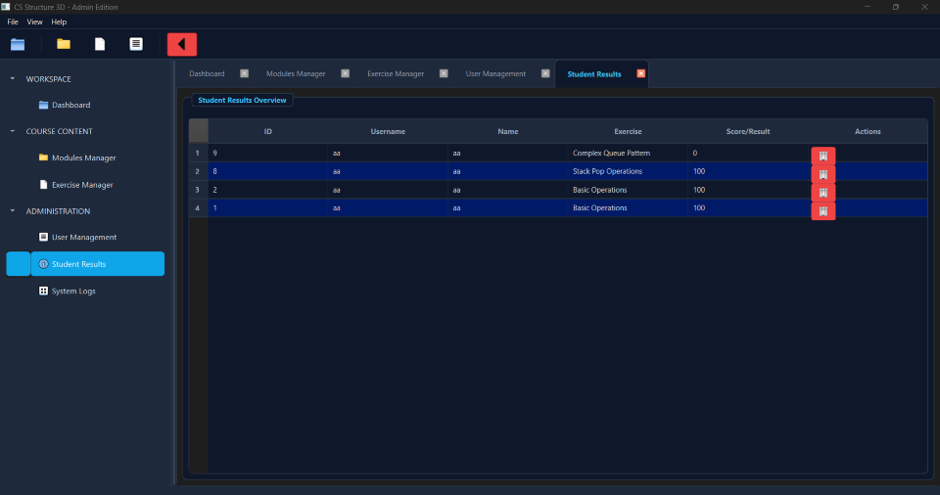
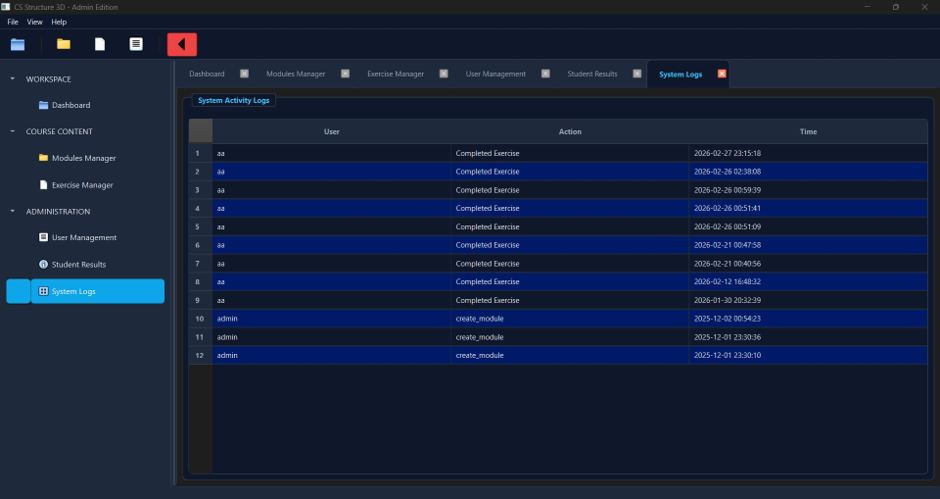
The user workflow allows students to select learning modules, run interactive simulations with real-time parameter controls, and monitor their progress. An administrative dashboard provides instructors with tools to manage learning modules, exercises, user accounts, and review student results and system activity logs. The project followed a structured methodology encompassing requirements analysis, system design (documented with UML diagrams including Use Case, Class, and Sequence diagrams), Python-based implementation, and rigorous usability testing. Evaluation results showed significant improvements in students' ability to visualize and articulate abstract concepts, demonstrating the tool's effectiveness in bridging theoretical knowledge with practical intuition and offering a scalable, low-barrier solution for CS education.
Key features include animated simulations of fundamental data structures (stacks, queues, linked lists, binary trees) with user-driven operations, interactive CPU scheduling algorithms (FCFS, Round Robin) with process queues and utilization graphs, and network topology visualizations demonstrating OSI layers and packet routing. The system incorporates an SQLite database for managing user profiles, tracking progress, storing simulation parameters, and logging performance metrics.
The user workflow allows students to select learning modules, run interactive simulations with real-time parameter controls, and monitor their progress. An administrative dashboard provides instructors with tools to manage learning modules, exercises, user accounts, and review student results and system activity logs. The project followed a structured methodology encompassing requirements analysis, system design (documented with UML diagrams including Use Case, Class, and Sequence diagrams), Python-based implementation, and rigorous usability testing. Evaluation results showed significant improvements in students' ability to visualize and articulate abstract concepts, demonstrating the tool's effectiveness in bridging theoretical knowledge with practical intuition and offering a scalable, low-barrier solution for CS education.
File / Project Preview
Project Gallery
Screenshot
Screenshot
Screenshot
Screenshot
Screenshot
Screenshot
Screenshot
Screenshot
Screenshot
Screenshot
Related Projects



Project Details
Category
Graduation Projects
Completed
Sep 27, 2026
Institution / University
جامعة الملك خالد
Platforms
Android, iOS
Technologies
Python
PyQt6
PySide
Matplotlib
VPython
SQLite
PyInstaller
UML